


Madurai is popularly called ‘Thoonga Nagaram,’ the city that never sleeps. That nickname justifiably describes its night life.– Madurai
MADURAI
Madurai is an energetic, ancient city on the Vaigai River in the South Indian state of Tamil Nadu. Its skyline is dominated by the 14 colorful gopurams (gateway towers) of Meenakshi Amman Temple. Covered in bright carvings of Hindu gods, the Dravidian-style temple is a major pilgrimage site. Millions attend the processions and ceremonies of April’s Chithirai Festival celebrating Meenakshi and Lord Vishnu.
Madurai city has something for everybody. The famous Floating Festival is of great religious importance and attracts pilgrims from across the country. The adventurous tourists people can visit Periyar Wildlife Sanctuary and Megamalai tea estates, while the nature lovers can go to Kodaikanal, Suruli and Kumbakkarai Water Falls. Thus, Madurai city presents a beautiful blend of art, culture, spirituality, technology and entertainment, thus making it a popular tourist destination.
NEARBY ATTRACTIONS
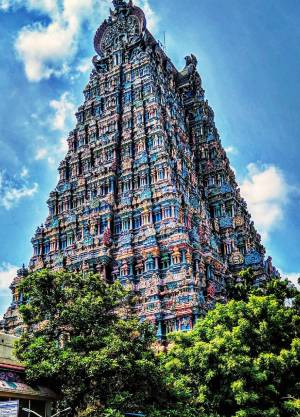
Meenakshi Amman Temple
Meenakshi Sundareswarar Temple or Meenakshi Amman Temple is the historic Hindu temple which is located in the city of Madurai in Tamil Nadu. This temple is among the most famous temples of India which are known throughout the world for its outstanding and impressive architectural beauty. In the Hindu religion temple is the place which is reserved for spiritual and religious activities that include prayers and analogous rites. Sri Meenakshi Amman temple of Madurai is dedicated to Lord Shiva and his consort Goddess Meenakshi (Parvati). Goddess Meenakshi is another form of the Goddess Parvati who is worshiped mainly by South Indians. The utmost architectural wonder of Meenakshi Amman temple is a testimony to the affluent Dravidian Culture. Some of the prominent features of this colossal temple are Temple Architecture, Ashta Shakthi Mandapam, Meenakshi Nayakkar Mandapam, and Porthamarai Kulam Golden Lotus Tank.
40 mins (23 km) via Madurai Main Rd
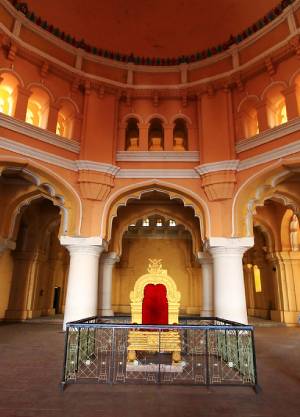
Thirumalai Nayak Palace
Thirumalai Nayak Palace is a 17th century palace was built by King Thirumalai Nayak, one of the Madurai Nayak rulers in 1636 AD in the city of Madurai, India. This Palace was built with the help of an Italian Architect and is a classic fusion of Dravidian, Islamic and European styles.Tirumalai Nayak’s Palace at Madurai was considered to be one of the wonders of the South. Thirumalai Palace was declared as a national monument and is now under the protection of the Tamil Nadu Archaeological Department. The time for the visit to the palace is from 9 a.m. to 5 p.m. on the payment of the entrance fee. The palace is well equipped to perform Light & Sound shows depicting the story of Silapathigaram both in Tamil and English languages. The Palace is located in the eastern side of the city, around 1.2 km South East of the Meenakshi Amman Temple in the city of Madurai. Madurai being a popular tourist center is well connected by railways and has daily flights to Mumbai and Chennai.
40 mins (22 km) via Madurai Main Rd
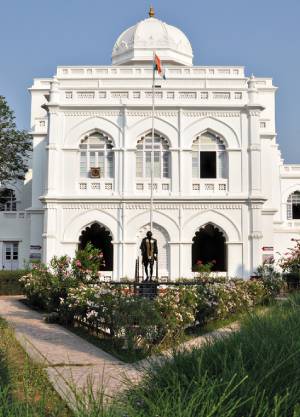
Gandhi Museum
Rani Mangamma’s palace has been renewed and converted to Gandhi museum. The museum displays information about Mahatma Gandhi, and most importantly it showcases the original blood-stained garment of Gandhi when he was assassinated by Nathuram Godse. The other piece of the garment is kept at the Gandhi Museum in Delhi. This museum is one of the 5 museums in India (others in Mumbai, Barrackpore, Sabarmati and Patna) known as Gandhi Sanghralayas. No entry fee for museum visitors. Gandhi Memorial Museum at Madurai has been built and organized by Gandhi Smarak Nidhi. It is accepted as a building probably constructed by the Nayak Queen Rani Mangammal, as evidenced by a letter written to her in 1700AD. It was in the year that the palace with about 13 acres of land was gifted by the Tamilnadu state Government, to the Gandhi Smarak Nidhi for the purpose of housing Gandhi Memorial Museum.
21 mins (25 km) via Madurai Main Rd
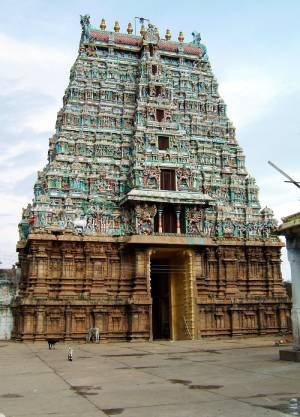
Azhagar Kovil
Alagar Koil is a temple dedicated to Lord Vishnu. It is situated at a distance of 21 km from Madurai, on foot of Alagar hills. It is a temple that has the residing deity as Vishnu. The Lord here is known by the name Azhagar. He is the brother of Goddess Meenakshi and when the wedding of the Lord and Goddess takes place in the month of Chithrai, amongst the natural beauty of the woods. The Vaishnavite temple is famous for its beautiful sculptures and exquisite ‘Mandapam’. It is believed that pilgrims visited Azhgar Koil even in the early days of the Sangam age. There is another shrine nearby, dedicated to Karuppannaswamy, the God of Kallars. There are finely carved eighteen steps, which are an object of both worship and amazement by the devotees. It is claimed that nobody dares to tell a lie at this spot. The place is also known for its holy springs called Silamboru and Noopura Gangai. According to local tradition, these springs originated from the anklets of Maha Vishnu during His incarnation as Trivikrama.
5 mins (1 km) via Melur Rd
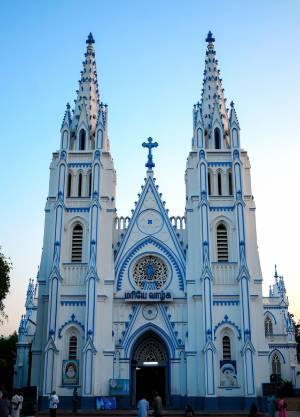
St. Mary's Church
St. Mary’s Church in Madurai, Tamilnadu, India was first constructed in 1840. An imposing building with two tall (42 meters) Bell towers, the church has been elevated to the status of a Cathedral in 1969. St. Mary’s Church is located on East Veli Street in Madurai; St. Mary’s Cathedral is the seat of the Roman Catholic Archdiocese of Madurai. It is one of the oldest Roman Catholic churches in India, situated about 2 kilometers (1.25 miles) south-east of Madurai Railway Station. Its two elegant Roman-style bell towers, about 42-meter-high (140 feet), are visible from a distance. The façade of the church is an amalgamation of various forms of European and Continental styles. The new church, the one we see today, was constructed during 1916.